Hawkins Holistic

Naturally Yours

Category: Uncategorized

Mental health – Healing Within 


As a holistic health practitioner I provide one-on-one counsel in natural nutrition & lifestyle. I’ve now completed advanced education in cognitive support, meaning I specialize in nutrition & lifestyle for those experiencing chronic or acute mental health problems. 

Not only do I have education in this area, I have personal experience too.

Mood disorders can be an ongoing struggle and are often accompanied by a feeling of hopelessness. That need not be the way. I know that with proper nutrition, supplementation, stress management and mindfulness practice we can lay the groundwork for healing and create a better quality of life. Taking care of ourselves in these ways can be the difference between mild and severe depression, connection over isolation, and having the fight in you vs giving up. 

If you or someone you know is suffering a mild/moderate mental health setback and is ready to make positive changes please contact me. I want to help. 🙂

hawkinsholistic@gmail.com 

Love Prevails


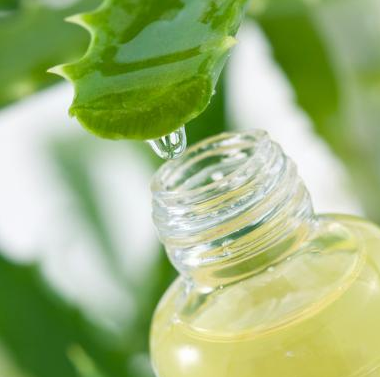
Aloe Vera Juice: to drink or not to drink?

Picture 8

As a holistic nutritionist, I spend a lot of time in health food and supplement stores (*heaven*). I’ve seen aloe vera juice in the aisles and always wondered about it. If it’s so good for healing & nourishment when applied topically, can it heal our insides in the same way? Is aloe vera juice the internal healing supplement that some claim it is? After conducting some research on the topic, I found that the answer is not so cut & dried.

Here are some common questions about aloe vera juice:

  • Does it taste good?
    • The undiluted, pure juice is bitter. Think of it like taking a shot of hard alcohol. Without the buzz.
  • Is it safe to drink?
    • If you were hoping for a clear answer, unfortunately I cannot provide one. In fact, the issue is quite controversial and the research is ongoing. The FDA has not deemed this product safe for human consumption. Most alarming is that one part of the leaf contains the carcinogen aloin, and when non-decolorized whole-leaf extract of aloe vera juice was given to rats, it caused tumors to develop in the large intestine. Yes this is unsettling (poor rats!!) but this effect has not been seen in humans. And there is a way to avoid alion: buy decolorized juice made from the inner leaf; it is void of alion. Also, if you are taking other medications, it’s a good idea to check with your doctor about possible drug interactions.
  • What’s the consistency?
    • It’s like that of any juice, and not at all the same consistency as the aloe vera gel we apply topically. Totally different product.
  • How important is it that I drink organic aloe vera juice?
    • Always choose organically produced and manufactured aloe vera juice. The safety of the product is already in question so if you choose to consume it, best go with the pure, uncontaminated product that hasn’t been sprayed with chemicals or grown in a GMO environment.
  • Are there are known side-effects?
    • Aloe vera juice may be laxative in nature, causing diarrhea.
  • What are the health benefits?
    • As it is laxative in nature, it can be helpful for constipation relief. It’s also said to be effective for diabetes (improving blood sugar levels) and heart disease (reduction in total cholesterol levels, while HDL, the “good cholesterol”, increased). As with the topical version, aloe vera juice has anti-inflammatory and antioxidant effects. According to the Ayurvedic tradition, aloe vera juice is cooling to the liver and gallbladder (good for those with a Pitta dosha.. find your dosha here http://doshaquiz.chopra.com/).
  • How much should I drink?
    • Follow the recommendations on the bottle, but I do not think it’s necessary to consume the pure product daily for benefits.

I hope this article provided you with some consumer knowledge about aloe vera juice. If you have any further questions, I’d be happy to answer them! Contact me at hawkinsholistic@gmail.com.

Naturally yours.

Sarah Hawkins, R.H.N.

Going Gluten-Free: beyond the trend

BE WARNED: just cuz that cake is gluten-free does not mean it's healthy!

BE FOREWARNED: just because that cake is gluten-free, vegan, low-fat etc. does not mean it’s healthy!

When it comes to going gluten-free (GF), I recommend it for anyone who wants to live a healthy life full of vibrancy, energy & radiance (yes, you!). But for those suffering from serious or even minor health conditions, avoiding gluten is of particular importance, in fact, it can be a game changer.

Why is gluten so “bad”? Modern wheat is now incredibly over processed, and to our bodies, it’s a foreign substance. As such, our bodies react to it via body-wide inflammation and spiked blood sugar levels. It’s worth noting that inflammation is the predecessor to all disease.

Going gluten-free can relieve or correct the following conditions:

  • Chronic inflammation (arthritis, allergies, atherosclerosis)
  • Skin disorders (acne, eczema, psoriasis, rashes)
  • Digestive disturbances (constipation, gas, IBS)
  • Excess weight (especially around the abdomen)
  • Headaches and migraines
  • Fatigue and lethargy
  • Cognitive disorders (anxiety, depression, lack of concentration, mental fog)
  • Pain in general!

If you are experiencing any of the above, and wheat has been a mainstay in your diet, I recommend omitting gluten from your diet for 2 weeks to see if your symptoms improve.

The following grains are naturally gluten-free (i.e. safe to eat on a GF diet):

  • Millet
  • Quinoa
  • Rice (brown, white, wild)
  • Amaranth
  • Buckwheat
  • Sorghum
  • Teff
  • Oats labeled GF (although oats do not naturally contain gluten, they are frequently contaminated with gluten because they are processed at mills that also handle wheat; avoid them unless they come with a guarantee that they are gluten-free)

Omit:

  • Wheat
  • Wheat germ
  • Rye
  • Barley
  • Bulgur
  • Couscous
  • Farina
  • Graham flour
  • Kamut Matzo
  • Semolina
  • Spelt
  • Triticale

Gluten is sneaky! Watch out for breaded foods (e.g. tempura, some french fries), soy sauce, and beer, unless declared GF!

Some great gluten-free products are:

  • Bob’s Red Mill Gluten Free oats
  • Bob’s Red Mill Gluten Free muesli
  • Trader Joe’s Gluten Free oats
  • Glutenull bread products
  • Tinkyada rice pasta
  • Explore Asian bean pasta (bonus: it’s high in vegetarian protein)
  • Food Should Taste Good crackers
  • Bragg Liquid Aminos (use this in place of soy sauce)

And if you have a sweet tooth, Betty Crocker makes a great GF cake mix!

Going gluten-free, while it requires some initial adjustment, is absolutely doable. If you need guidance, support and advice as you undergo dietary & lifestyle changes, contact me at hawkinsholistic@gmail.com.

Naturally yours,

Sarah Hawkins, RHN

Mother’s Day: let there be cake!

photo

I love my Mom, and with today being Mother’s Day, she deserved something extra special! As such I made her this gluten-free chocolate cake (it’s made with quinoa!). It’s OH so moist and freezes really well (should we not get through it in the next 3 days… yea right).

Get the original tried-and-true recipe from the ladies behind Quinoa 365 here: http://patriciaandcarolyn.com/the-original-quinoa-chocolate-cake/

I layer Smucker’s No Sugar Added raspberry jam in the middle, and today I topped it off with vanilla frosting. A simple dusting of icing sugar, done right before serving, also adds a nice touch.

Please note that although it’s gluten-free and made with quinoa, I’m not claiming this cake to be healthy! There is a lot of sugar and fat in this cake, so enjoy in moderation! And remember, a holistic lifestyle embodies nutritional awareness and a balanced approach to food.

Naturally yours ♥

Sarah Hawkins, R.H.N.

Field Dreaming 

Beautiful British Columbia

I can’t wait to have my own expansive, green & fertile backyard! Til then, this will do. ~ Richmond, B.C. 

Five Easy Ways to ‘Be Present’ Now

And you’re currently using one of them…

I’m talking about the senses: sight, smell, sound, taste, and touch. Consciously tapping in to one or more of your senses immediately brings you into the present moment. Best of all, it can be done anywhere, however covertly or candidly you choose. How practical!

Why does “being present” matter so much? It puts the ixnay on past or future focused thinking, and allows us to do one thing really well (rather than 10 things at 10% – multi-tasking!).

I’d like to get your wheels turning for a moment. Try to recall the times in your life that you’ve been truly present. Perhaps you are looking at a beautiful landscape, listening to a moving song, or tasting an exquisite entrée. Or maybe it’s cuddles with your beloved pet or smelling the aroma of freshly blossomed spring flowers. For most of us, these moments happen as they happen, without striving to make it so. But it’s moments like these when our stressors and anxieties seem to fade away. So, why not choose to have more of these experiences?

photo

A special place where I go to “take it all in.”

Now that you’re game to try this out (I hope!), I’ll share the key to making it work: you must make a conscious effort to note to yourself what it is that you are seeing, smelling, tasting, hearing, and/or touching at this very moment. And guess what, you don’t have to like “it” (although it would be nice).

My call of action to you: next time your brain is taking Stress St. or going down Anxiety Ave, or you simply want to really relish an experience, remember that you have the option to immediately ground yourself by taking a deep breath, and choosing to harness the power of your senses. This will help align your body & mind, and bring you into the present moment.

Naturally yours ♥

Sarah Hawkins, R.H.N.


Yogi Granola: a recipe

photo

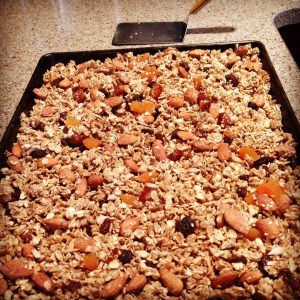
No, I’m not being ironic or “cute” when I say ‘Yogi Granola‘. It’s the real deal. Everyday at the ashram the hundreds of yogis were served home-baked granola at brunch. It was by far my favourite sweet treat at the ashram. So, when I returned home I went into granola withdrawal. Store bought granola has always been a sore spot for me (too much sugar, or so little quantity of the good stuff for a lot of $). Alas, the Sivananda organization has freely shared a recipe for their granola. I tried it out and I am one happy camper (although I’m no longer actually camping..sad face).

Here is the recipe, with a few tweaks a la Hawkins Holistic (I found this recipe wasn’t sweet enough, and didn’t need the amount of wheat as originally called for).

YOGI GRANOLA

  • 1/2 cup maple syrup
  • 1/3 cup agave syrup
  • 1/2 cup hot water
  • 1 tsp vanilla extract
  • 5 cups rolled oats (I use Bob’s Red Mill large flake, GF)
  • 5 tbsp wheat bran
  • 5 tbsp wheat germ
  • 2 tbsp ground flax
  • 3/4 cup almonds
  • 1 cup sunflower seeds
  • 1/3 cup sesame seeds
  • 2 tsp ground cinnamon
  • 1/2 cup golden raisins or raisins
  • 1/3 cup chopped dates or other dried fruits (I used dried apricots)

~ Heat the oven to 250F. Combine the maple syrup, agave, hot water, and vanilla extract.

~ Mix the grains, nuts, seeds and cinnamon in a large mixing bowl. Stir in the maple syrup solution and mix thoroughly. Spread out the mixture on a lightly greased baking sheet and bake in the oven for 45-55mins, stirring three or four times to prevent it from burning. The granola is ready when it is light brown.

~ Mix the granola with the dried fruit while still warm, breaking up the larger chunks as you do so.

~ Leave to cool and then store in air-tight containers.

Serve granola with almond milk as a healthy breakfast or snack, or sprinkle some granola atop your favourite dairy-free ice cream for a decadent dessert!

Naturally yours.

Sivananda Ashram & Yoga Retreat ~ the experience so far. 

Om, dear readers. I acknowledge that it has been awhile since my last post. Reason being is that since Feb 01, I’ve been in the Bahamas at an Ashram Yoga Retreat. I’m here for 37 days. 

What does this entail? A concrete schedule consisting of a daily 5:30am wake-up, 6-8am meditation and satsang, 10am brunch, sivananda yoga/asana practice either in a class or independently, 2-8pm karma yoga (more on this below), and 8-10pm satsang with lights out at 10:30pm. 

Meat and alcohol are not permitted on the premises, while caffeine/coffee is not served or encouraged because of the stimulant properties. Modest clothing is required. Purity of body, mind, and spirit is the goal. And according to spiritual scripture, this is attained first and foremost via karma yoga. 

WHY am I at the Sivananda ashram? I wanted & needed to put my self-imposed limits to the test, and I had a desire to “get away” while doing something with spiritual significance…something that would advance my mind/body intellect and sense of well-being rather than numb it. There is absolutely a time for fun, intoxicating, decadent and relaxing vacations, but this was not what I needed. At the time of booking this adventure, I craved a schedule, discipline, commitment, community, and a challenge. At the ashram I received all those things & more.

WHAT am I doing here? As a ‘Karma Yogi‘ I offer daily selfless service (i.e. working for no monetary gain or expectation of reward of any kind, and void of any ego). 

My karma yoga at the ashram is the evening dinner shift, 2-8pm daily. It’s hard work – lots of chopping, peeling, stirring, cleaning and also serving the residents/guests of the ashram, with numbers varying from 200-330 yogis. The food is strictly vegetarian and is “sattvic” in nature, meaning pure, wholesome and void of stimulating/numbing properties. We discourage gluttony, although the food is plentiful. The yogic style of cooking emphasizes use of Ayurvedic spices/seasoning and quality complex carbohydrates (legumes, vegetables and grains). I find myself eating vegan here and I feel good although I have no intention of continuing as a full-time vegan once I return home. That said, I am learning a lot about vegetarian cooking and the Ayurvedic principles. As a holistic nutritionist, this newfound knowledge will be contemplated and utilized for years to come. 

Being here is no walk in the park (or zen garden!). For example, this morning one of the head yogis caught me playing with the ashram kittens in the garden rather than attending meditation. I was embarrassed! And the work challenges me physically, emotionally and mentally. Kitchen work is kitchen work, whether it be in a pricey modern dining establishment or an ashram! 

All the while, living this lifestyle is a great experience, and it doesn’t hurt that the ashram is situated on a beautiful sandy beach on Paradise Island! And there’s a Starbucks within a 10 min walk 😉 No matter where we are in the world, some aspects of ourselves remain – our habits, likes & dislikes, and our lens through which we see the world. I am working towards being completely at peace with this, while challenging those beliefs that no longer serve a higher purpose. Maybe that’s why I’m here after-all… To cultivate self-acceptance and a greater sense of duty. Selflessly.

One of the songs we sing in satsang repeats this mantra: serve, love, give, purify, meditate, realize. That about sums it up. 

Om Shanti. 

Saucily Satisfied

photo 3

Yes, I’m one of thousands on a ‘cleanse’ or ‘detox program’ as we enter the new year. I’ve chosen the Canadian born Wild Rose Herbal D-Tox, meaning no sugar/gluten/tropical fruits/dairy/alcohol for 12 days, while taking herbal supplements and tinctures that support detoxification. I was not thrilled about giving up wine and sweets, but I LOVE an incentive to get creative in the kitchen.

Enter: homemade sauces, dressings and dips. They are the saving grace of this detox. See my three, holistic-nutritionist-approved favorites below! All recipes are vegan & gluten-free, and are great for everyday (not just when you’re trying to be healthy!).

DAIRY-FREE PESTO *adapted from fellow R.H.N. Julie Daniluk

  • 2 cups of fresh basil
  • 3/4 cup extra virgin olive oil
  • 1/2 cup sunflower seeds
  • 4-6 garlic cloves
  • 1 tbsp nutritional yeast
  • 1/2 tsp of salt
  • 1 tbsp freshly squeezed lemon juice

Combine all ingredients in a food processor, and mix until smooth.

Meal Idea: This is AWESOME served atop organic bean pasta (great product). Garnish the dish with shredded raw beet and carrot.

HUMMUS DIP * adapted from OhSheGlows.com

  • 2 cups cooked chickpeas
  • 1 tsp salt
  • 2-3 garlic cloves
  • 1/3 cup tahini
  • 7-8 tbsp freshly squeezed lemon juice
  • 2 tbsp of water or low sodium vegetable broth
  • Garlic & Chili Flax Oil, for drizzling
  • turmeric for garnish (why? this spice, which gives curry its yellow colour, is a potent anti-inflammatory – use it however you can!)

Place all ingredients into a food processor and process until the hummus is smooth. If you use unsalted chickpeas, you may need more salt. Garnish with turmeric and drizzle of garlic chili flax oil.

Tip: use hummus as a sandwich spread in place of mayonnaise.

RANCH DRESSING *adapted from RunningOnRealFood.com

  • 1/4 cup tahini
  • 1/4 cup freshly squeezed lemon juice
  • 1 tbsp apple cider vinegar
  • 2 tbsp olive oil
  • 1 tbsp nutritional yeast
  • 1 tsp sea salt
  • 3 garlic cloves
  • 1/2 tsp onion powder
  • 1/2 tsp dried basil
  • 1/2 tsp dried parsley
  • 1/4 cup water or low sodium vegetable broth

Place all ingredients, except water, into a food processor or blender and mix until smooth.

Add water/vegetable broth slowly to reach desired thickness.

Tip: Having seafood? Swap out the basil for 2 tsp of dried dill. This version is great mixed with canned tuna or drizzled on salmon.

There you have it! These 3 delicious recipes are super easy to modify, and hey, I hardly miss the wine and Coconut Bliss with these around 😉

Enjoy!

Naturally yours.

Sarah Hawkins, R.H.N.